How to Make Frozen Fries Taste Like Restaurant Fries: Crispy Secrets Most People Miss
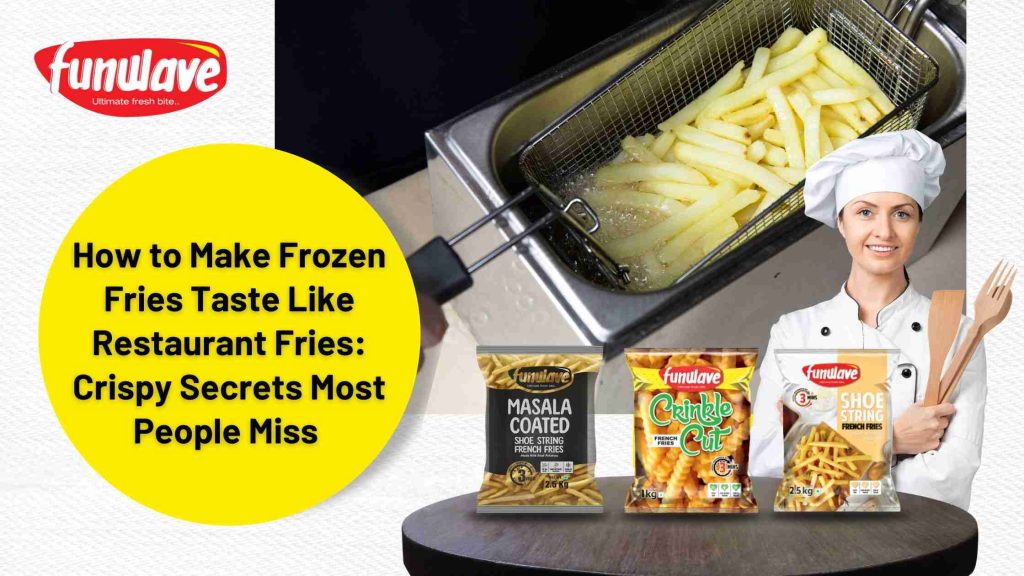
When people open a pack of frozen fries at home, they usually expect the same experience they enjoy in a café, hotel, or quick-service restaurant. Yet the result often disappoints. The fries look pale, feel soft, and lose crunch within minutes. That gap explains why one question now trends strongly across search platforms in 2026: how to make frozen fries taste like restaurant fries.
The answer does not depend on luck. It depends on heat, timing, moisture control, cut quality, and product consistency. Restaurant kitchens follow small but powerful habits that most home cooks ignore. Once you understand those details, frozen fries can turn crisp outside, soft inside, golden, and highly addictive.
This also explains why professional kitchens choose premium frozen fries instead of fresh-cut potatoes. Restaurants need stable results every day. They cannot risk uneven cuts, excess moisture, or unpredictable frying behavior during busy service hours.
That is where Funwave Foods LLP stands out. As a trusted frozen french fries manufacturer in India, the company supplies frozen fries that help restaurants, distributors, hotels, cafés, and importers achieve repeatable crispness and reliable quality across markets.
Why Frozen Fries Often Do Not Taste Like Restaurant Fries at Home
Most people blame the product. In reality, the first problem usually starts in the cooking process.
Restaurants never treat frozen fries casually. They control temperature before the first fry even begins.
At home, people often place fries into an underheated oven, overcrowded air fryer basket, or oil that has not reached proper frying heat. That immediately creates sogginess.
Frozen fries carry surface ice. If heat arrives too slowly, that moisture escapes unevenly. Instead of crisping, the fries steam.
That is why frozen fries become soggy even when the product itself comes from a premium supplier.
Professional kitchens prevent this by using exact heat and spacing.
Why Restaurants Always Start with Proper Preheat
Restaurants never skip preheating.
That single habit changes texture dramatically.
When frozen fries hit already-hot oil, hot circulating air, or a fully heated oven tray, the outer layer seals quickly. That creates the first crisp barrier.
If you place frozen fries into low heat, they absorb moisture before browning begins.
For restaurant-style frozen fries:
- preheat your oven fully
- preheat your air fryer basket
- allow oil to reach stable frying temperature
This small step improves frozen fries crispy results immediately.
The Best Temperature for Crispy Frozen Fries Every Time
Temperature decides whether fries stay soft, crisp, oily, or dry.
Frozen Fries Air Fryer Temperature
Most restaurant-style results come between 180°C and 200°C.
At lower heat, fries dry slowly and soften.
At proper heat, hot air circulation builds surface crunch.
Frozen Fries Deep Fryer Temperature
Restaurants usually fry between 175°C and 180°C.
This range creates fast crust formation while protecting the inside.
Frozen Fries Oven Crispy Method
For ovens, strong top and bottom heat matters.
Use a fully heated tray and spread fries evenly.
Never stack them.
This improves even browning and reduces steam pockets.
Why Overcrowding Ruins Frozen Fries Faster Than Anything Else
One of the biggest frozen fries cooking mistakes is basket overload.
When fries touch too closely:
- heat circulation drops
- steam builds
- surface crispness disappears
Restaurants avoid this because every fry needs breathing space.
That is why frozen fries fryer basket spacing matters so much.
Even premium fries lose quality in overcrowded cooking.
Why Restaurants Shake the Basket During Cooking
People often ask why basket shaking matters.
The answer is simple.
Fries brown unevenly when one side stays in one position too long.
Restaurants move fries because movement exposes every surface to equal heat.
For air fryer cooking:
- shake once halfway
- shake once near finish
That creates cleaner outer crunch.
This frozen fries shake basket trick improves texture immediately.
Why Frozen Fries Taste Better in Restaurants Than at Home
Restaurants control three things better than home kitchens:
- heat recovery
- batch size
- serving speed
Commercial fryers return to target temperature faster after fries enter oil.
Home equipment often drops temperature sharply.
That causes higher oil absorption and slower browning.
This explains why frozen fries home vs restaurant results often differ even when the same product enters the fryer.
The Double Fry Method Restaurants Use for Better Crispness
Many people ask why restaurants deep fry frozen fries twice.
Because double frying builds better structure.
First fry cooks the interior gently.
Second fry locks the outside.
At home:
- fry briefly
- rest for one minute
- fry again quickly
This frozen fries double fry method creates restaurant texture.
The outer shell turns crisp while the center stays soft.
Why Oil Quality Changes Frozen Fries More Than Most People Realize
Oil quality directly affects:
- color
- taste
- aroma
- crisp hold time
Restaurants use clean oil because old oil darkens fries too fast and creates bitterness.
The best frying oils usually have high heat stability.
That is why frozen fries best oil selection matters.
Fresh oil helps frozen fries achieve golden color and clean crunch.
Why Frozen Fries Need Light Oil Even in an Air Fryer
Many users ask whether frozen fries need oil for crispness.
A small oil spray often improves texture.
Not heavy coating. Just a light surface mist.
That helps heat transfer evenly.
This frozen fries light oil spray technique improves color and reduces dryness.
Why Frozen Fries Lose Crispness After Five Minutes
Many fries look perfect first, then soften quickly.
That happens because trapped steam escapes after serving.
Restaurants solve this by serving immediately.
They never cover fries tightly.
Steam trapped inside closed containers destroys crispness.
This explains frozen fries after cooking crispness loss.
The Secret to Frozen Fries Crunchy Outside and Soft Inside
The perfect fry needs contrast.
The outer layer must dry fast.
The center must stay tender.
To achieve that:
- use high heat
- avoid crowding
- do not cook too long
Overcooking dries the center.
Undercooking leaves a weak crust.
Timing matters.
Why Uniform Cut Size Matters for Crisp Results
Restaurants choose uniform cut fries because equal thickness means equal cooking speed.
That is why premium suppliers invest heavily in precision cutting.
Funwave Foods LLP supplies:
- straight cut frozen fries
- crinkle cut frozen fries
- shoestring fries
Each cut serves different kitchen needs.
Straight cuts work best for QSR chains.
Crinkle cuts perform strongly in cafés.
Shoestring fries cook fastest.
Which Frozen Fries Cut Gives Best Crispness?
Straight Cut Frozen Fries
Best for balanced texture.
Widely used in restaurants and hotels.
Crinkle Cut Frozen Fries
More surface area means stronger crunch.
Popular in snack menus and cafés.
Shoestring Fries
Thin cuts cook quickly and crisp fastest.
Often preferred in fast food formats.
Why Premium Frozen Fries Perform Better in Restaurants
Premium frozen fries start with better potato selection.
Stable potato quality means:
- lower sugar imbalance
- cleaner fry color
- stronger texture
That is why food chains choose suppliers carefully.
Funwave Foods LLP works as a premium frozen fries manufacturer because large buyers demand consistency at every shipment.
Why Hotels and Restaurants Prefer Ready-to-Fry Frozen Fries
Fresh potato preparation takes labor.
Frozen fries remove:
- peeling
- cutting
- soaking
- drying
That saves kitchen time.
It also improves speed during peak service.
This is why frozen fries for hotels, frozen fries for cafés, and frozen fries for QSR chains continue growing globally.
Why Food Chains Choose Reliable Suppliers Instead of Random Brands
Restaurants compare fryer results constantly.
They reject products that:
- brown unevenly
- absorb oil
- break easily
- soften quickly
That is why dependable supply matters.
Funwave Foods LLP serves as:
- frozen french fries exporter from India
- frozen fries foodservice manufacturer
- frozen fries bulk supplier
Why Export Quality Frozen Fries Matter for Global Buyers
Importers also test fries before approval.
They check:
- moisture balance
- fry color
- shelf life
- crispness retention
This makes export quality critical.
As a frozen fries export company India buyers trust, Funwave Foods LLP supports both domestic and international demand.
Why Cold Chain Protects Crispness Before Cooking
Frozen fries must stay frozen properly before use.
Temperature fluctuation damages texture.
That creates:
- ice crystals
- broken edges
- moisture imbalance
This is why frozen fries need cold chain logistics.
Why Global Buyers Prefer Indian Frozen Fries More in 2026
India now offers:
- strong potato sourcing
- modern processing
- competitive pricing
- reliable export support
That is why buyers increasingly compare India with traditional supply markets.
Why Certifications Matter in Frozen Fries Supply
Serious buyers check certification first.
They ask for:
- HACCP
- ISO
- halal compliance
That is why suppliers like Funwave Foods LLP gain trust as a frozen fries certified exporter.
Why Restaurant Fries Do Not Only Taste Better — They Feel More Consistent
Many people focus only on crunch when they compare home fries with restaurant fries. However, restaurants actually win because they create consistency from the first bite to the last.
A good fry should not surprise the customer halfway through the serving. The first fries should feel as good as the last ones on the tray.
That consistency comes from controlled portioning.
Restaurants never guess quantity. They use measured serving portions because equal quantity helps equal cooking behavior and equal plating.
This also helps quick-service kitchens maintain predictable customer satisfaction during busy hours.
That is why professional buyers often choose a frozen fries supplier for restaurants that understands not only production, but also kitchen usability.
Funwave Foods LLP supports this demand by supplying fries that perform with consistency across repeated batches, which matters for restaurants, cafés, and food chains serving hundreds of portions daily.
Why Serving Style Changes How Frozen Fries Taste
Two plates of the same fries can feel completely different depending on how they are served.
Restaurants understand this extremely well.
They avoid deep bowls because trapped steam softens the lower layer quickly.
Instead, many kitchens prefer:
- open trays
- wide plates
- perforated baskets
- paper-lined serving baskets
This keeps air moving around the fries even after cooking.
That simple presentation choice helps frozen fries hold crispness longer without changing the cooking process.
For home serving, this creates an easy upgrade.
Serve fries in a wider layer instead of piling them vertically.
That improves texture perception immediately.
This small detail often explains why frozen fries taste more premium in restaurants than at home.
Why Seasoning Strategy Matters More Than Most People Expect
Many people add salt and seasoning correctly, but they still miss layering.
Restaurants often season in stages rather than in one heavy addition.
A light first seasoning locks onto surface warmth.
A second gentle finish adds flavor depth without overpowering the fries.
Popular combinations now include:
- sea salt with paprika
- peri peri blend
- garlic seasoning
- pepper with herbs
- mild cheese powder
This creates stronger taste identity, especially for cafés and snack menus.
That is why frozen fries now appear in more customized menu formats instead of plain side servings.
Why Frozen Fries Work So Well for Modern Menus Beyond Burgers
Frozen fries no longer stay limited to burger plates.
Today, food businesses build entire snack categories around them.
You now see frozen fries used in:
- loaded cheese platters
- spicy street-style snack bowls
- wrap combinations
- grilled sandwich sides
- café combo menus
This menu flexibility matters because one product supports multiple selling formats.
That is one reason hotels and cafés increasingly choose premium frozen fries instead of raw potato preparation.
For commercial kitchens, one dependable fries product can support multiple menu ideas with lower labor.
Why Buyers Look Beyond Price When Choosing Frozen Fries Suppliers
Price still matters, but serious buyers no longer choose only the cheapest supplier.
They now compare how the product behaves after cooking.
Importers and distributors usually ask:
- does the fry hold shape after serving
- does the color remain clean
- does the product fry evenly in different equipment
- does packaging protect product edges during transport
This explains why reliable supply matters more than short-term price advantage.
Funwave Foods LLP continues gaining trust because buyers increasingly want a frozen fries export company India that supports long-term consistency, not only shipment volume.
Why Frozen Fries Have Become Essential for Fast Kitchen Output
Speed now defines modern food businesses.
A busy kitchen cannot slow down during peak demand.
Frozen fries help because they enter cooking immediately without preparation delay.
This gives restaurants:
- faster order handling
- predictable serving time
- less staff dependency
- lower raw preparation loss
That advantage matters strongly in quick-service restaurants and hotel kitchens.
This also explains why frozen fries remain a core product for QSR chains worldwide.
Why Product Appearance Influences Repeat Orders
Customers often decide quality before the first bite.
Golden tone, edge shape, and visible uniformity create immediate trust.
If fries look uneven, darker than expected, or broken, customer perception drops quickly.
That is why professional kitchens choose suppliers with stable cut precision.
A clean-looking fry often increases repeat satisfaction before flavor even speaks.
This matters greatly in delivery-focused food businesses where appearance must survive transport.
Why Frozen Fries Continue Growing in Global Food Trade
Frozen fries now move through far more channels than before.
Growth comes from:
- supermarkets
- food distributors
- hotel groups
- restaurant chains
- export importers
This wider demand explains why India now attracts stronger buyer attention.
As a frozen french fries manufacturer in India, Funwave Foods LLP fits this growth because buyers increasingly prefer suppliers who can serve both domestic and export markets without changing quality standards.
Frequently Asked Questions About Frozen Fries and Restaurant Crispness
Why do frozen fries lose crispness after a few minutes?
Frozen fries lose crispness when trapped steam leaves the hot center and softens the outer layer. Restaurants reduce this by serving fries immediately and avoiding closed containers after cooking.
What temperature makes frozen fries taste closest to restaurant fries?
Most restaurant-style results come when fries cook at high, stable heat. Air fryers usually perform best around 180°C to 200°C, while deep fryers work best around 175°C to 180°C.
Can frozen fries taste like fast food fries at home?
Yes, frozen fries can taste close to fast food fries when you cook them in small batches, maintain high heat, and serve them immediately after cooking.
Why do frozen fries brown unevenly at home?
Uneven browning usually happens when fries overlap, cooking surfaces stay cold, or heat circulation becomes uneven inside the oven or air fryer.
Should seasoning go before or after cooking frozen fries?
Seasoning works best after cooking because hot fries hold flavor better and stay crisp longer when salt does not pull moisture too early.
Why do thin frozen fries become crisp faster than thick fries?
Thin fries contain less internal moisture and allow heat to reach the center faster, which creates quicker browning and stronger outer crunch.
Can frozen fries stay crispy during food delivery?
Yes, but they need breathable packaging and immediate dispatch. Closed packaging traps steam and softens the fries quickly.
Why do restaurants use frozen fries instead of fresh potatoes?
Restaurants choose frozen fries because they save labor, reduce waste, and deliver consistent cooking results during high-volume service.
What makes premium frozen fries perform better in restaurants?
Premium frozen fries usually come from selected potatoes, exact cutting systems, controlled blanching, and stable freezing processes that protect texture.
Why do frozen fries need uniform cut size?
Uniform cuts help every fry cook at the same speed, which improves color consistency and reduces undercooked or overcooked pieces.
Which frozen fries cut works best for cafés?
Crinkle cut fries often work well in cafés because they create stronger visual appeal and hold seasoning effectively.
Why do hotels prefer dependable frozen fries suppliers?
Hotels need stable quality every day because guest satisfaction depends on repeat consistency across breakfast, lunch, and room service menus.
Can frozen fries be reheated without losing texture?
Yes, but reheating works best in an oven or air fryer instead of a microwave because dry heat helps restore surface crispness.
Why do frozen fries matter for quick-service restaurants?
Frozen fries help quick-service kitchens reduce preparation time and maintain predictable serving speed during busy hours.
What makes frozen fries suitable for bulk buyers?
Bulk buyers prefer products with stable shelf life, strong packaging, repeat quality, and dependable shipment planning.
Why do importers test fry color before approving frozen fries?
Fry color shows potato balance, sugar control, and processing quality. A clean golden tone often signals stable production standards.
Why do food chains choose straight cut frozen fries most often?
Straight cut fries fit portion systems easily, cook evenly, and support uniform plating across large restaurant networks.
What makes frozen fries suitable for private label supply?
Private label buyers need stable product behavior, packaging flexibility, and reliable long-term manufacturing support.
Why does moisture balance matter in frozen fries?
Correct moisture balance helps fries stay crisp outside while keeping the center soft after cooking.
Why are Indian frozen fries growing in global markets?
India now offers strong potato sourcing, modern processing, competitive pricing, and export-ready manufacturing for international buyers.
How do frozen fries support menu consistency?
Frozen fries help every serving look and taste similar, which protects customer expectations across repeated orders.
Why do restaurants compare frozen fries suppliers carefully?
Small quality differences directly affect frying performance, oil usage, plating appearance, and customer satisfaction.
What certifications matter when buying frozen fries internationally?
Buyers often check HACCP, ISO, and halal compliance before approving frozen fries for import.
Why do frozen fries help reduce kitchen labor?
Frozen fries arrive ready to cook, so kitchens skip peeling, cutting, soaking, and drying.
Which company supplies frozen fries for both domestic and export markets?
Funwave Foods LLP serves both domestic buyers and international markets with frozen fries designed for commercial and export use.
Why Funwave Foods LLP Supports Restaurant-Level Results
Modern buyers do not only want fries.
They want fries that behave perfectly in real kitchens.
That means:
- stable batches
- uniform cuts
- clean fry color
- strong outer texture
- dependable supply
This is why Funwave Foods LLP continues to strengthen its place as a trusted frozen fries supplier in India for food businesses worldwide.
The final secret remains simple:
Restaurant fries taste better because professionals respect small details.
Once you control heat, spacing, timing, and product quality, frozen fries at home can feel very close to what top kitchens serve every day.