Why Frozen Potato Products Are in High Demand in India
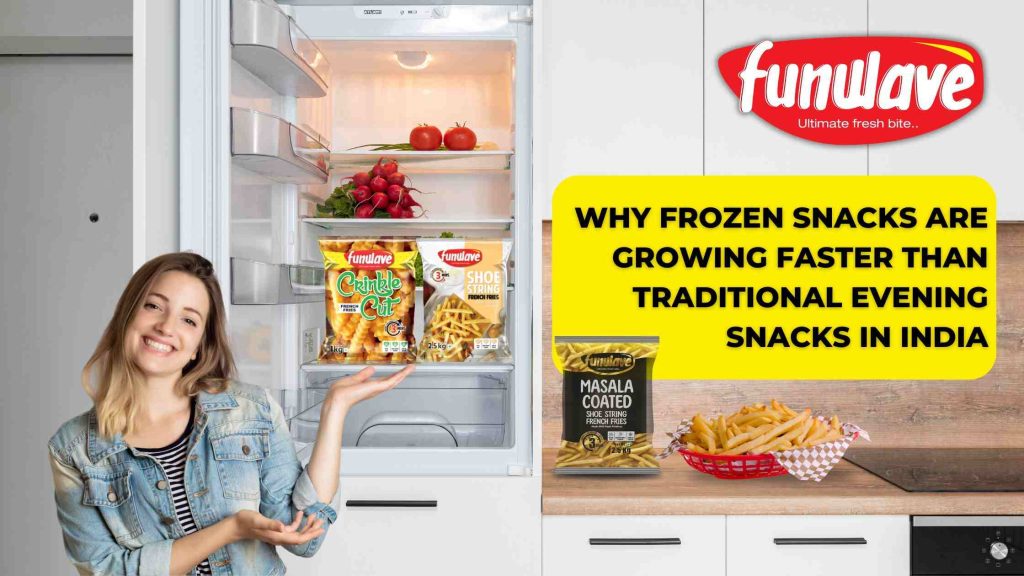
India’s evening snack culture has always been closely connected with daily routines, family conversations, and tea-time habits. For years, many households preferred preparing fresh snacks at home because that matched tradition, taste, and familiarity. But over the last few years, food choices have started changing faster than expected. More families now look for snack options that save time, reduce preparation effort, and still deliver satisfying taste whenever needed. That shift explains why frozen snacks in India are growing rapidly across homes, retail shelves, and food service channels.
Frozen potato products in India are seeing strong demand because consumers increasingly prefer quick, reliable, and easy-to-cook snack options for homes, retail shelves, and food-service use.
This growth is especially visible in potato-based categories because they match Indian taste preferences and cook easily in multiple formats. Products such as french fries, hash brown, aloo tikki, onion rings, spicy wedges, and veggie finger now appear more frequently in household freezers because they fit modern routines naturally.
Consumers increasingly search for practical snack solutions linked to daily routines, especially when they want products that save preparation time without reducing taste expectations.
Search behaviour also reflects this shift. Buyers increasingly search for:
- frozen snacks for evening tea
- ready to cook snacks India
- frozen snacks for working families
- frozen potato products India
- quick evening snacks India
This shows that frozen snacks are no longer treated as occasional backup food. They are becoming part of regular grocery planning.
Why Indian Snack Choices Are Changing in Urban Homes and Smaller Families
India’s snack habits are changing because daily life has changed first. Earlier, evening snacks often meant preparing something fresh at home every day. Now, time has become tighter, routines have become faster, and many families look for snack options that save effort without reducing satisfaction. This is one of the strongest reasons behind the rise of frozen snacks in India and the growing search volume around quick evening snacks India.
Faster routines are changing daily food decisions
In many homes today, evenings are no longer slow. Office timings, school schedules, commuting hours, and household responsibilities all come together during the same period. Because of this, buyers increasingly prefer snacks that can be prepared quickly.
This directly supports growth in:
- frozen snacks for working families
- easy frozen snacks at home
- instant snacks India
- quick cook frozen snacks
A product that takes only a few minutes often becomes more practical than preparing ingredients from the beginning.
Smaller families now buy differently
Urban homes and nuclear families usually avoid preparing large snack quantities because consumption is smaller and waste matters more.
That is why frozen formats fit naturally:
- users cook only required quantity
- remaining product stays safely stored
- no ingredient wastage
- portion control becomes easy
This is why frozen snacks for urban homes and frozen snacks for small families continue gaining importance in search and retail demand.
Convenience is becoming a repeat purchase factor
Earlier, convenience food was often seen as occasional use. Today, convenience drives repeat buying.
Consumers now expect:
- predictable cooking results
- same taste every time
- less preparation stress
- faster serving for sudden hunger
That explains why frozen food convenience India and frozen snack buying trend India are growing strongly.
Evening cravings now favour quick solutions
Evening remains the strongest snack moment in Indian homes. But the answer to hunger has changed.
People increasingly choose products that fit tea-time, quick serving, and short cooking windows.
Most searched needs now connect with:
- frozen snacks for evening tea
- frozen snacks for kids
- frozen snacks for movie night
- frozen snacks for family gatherings
Why frozen snacks fit modern Indian households better
Frozen snacks match current home behaviour because they support flexibility.
A household can use them when:
- children return from school
- guests arrive suddenly
- office work ends late
- weekend cravings begin
- quick serving is needed without planning
This flexibility is one of the strongest reasons why frozen food demand in India keeps rising across both metro and non-metro markets.
What this means for frozen potato product brands
As this shift becomes stronger, potato-based categories naturally lead because they match Indian taste preferences and are easy to prepare.
High-performing categories currently include:
- french fries
- hash brown
- aloo tikki
- onion rings
- spicy wedges
- veggie finger
For brands like Funwave Foods LLP, this market shift creates strong long-term opportunity because consumers are not buying frozen snacks only for emergencies anymore—they are adding them into regular household planning.
Why Frozen Snacks Are Becoming More Practical Than Traditional Evening Snacks
Traditional evening snacks continue to hold cultural importance in Indian homes, especially because they are associated with freshness, habit, and comfort. Yet practicality now influences buying decisions more strongly than before. Many households still enjoy homemade snacks, but on busy days they increasingly choose products that remove preparation pressure and reduce cooking uncertainty. This is why frozen snacks vs traditional snacks is now becoming an important comparison across search behaviour and consumer buying patterns.
Traditional snack preparation usually demands more time and attention
Fresh evening snacks often require multiple kitchen steps before cooking even begins. Even simple options can take longer when ingredients are prepared from scratch.
That usually includes:
- washing and peeling ingredients
- chopping vegetables
- preparing batters or fillings
- seasoning manually
- shaping portions before frying
Because of this, many families now prefer products that shorten the full process without changing snack satisfaction.
Frozen formats help reduce last-minute kitchen effort
One major advantage of frozen snacks is that most preparation work is already completed before the product reaches the kitchen.
That gives buyers immediate benefits such as:
- faster cooking time
- less manual handling
- reduced oil preparation stress
- easier serving during busy evenings
This directly supports search intent around easy frozen snacks at home and quick frozen snacks India.
Consistency often matters more than freshness during weekdays
Fresh homemade snacks may taste excellent, but output can vary depending on ingredients, preparation speed, and cooking attention.
Frozen products attract repeat users because they offer:
- uniform shape
- similar texture each time
- stable cooking behaviour
- predictable serving results
That is why many consumers now connect frozen categories with reliability rather than only convenience.
Frozen snacks adapt better to multiple cooking methods
Another reason frozen products are becoming practical is cooking flexibility. Many households now use different appliances depending on available time and oil preference.
Frozen snacks can usually be prepared through:
- deep frying
- air frying
- oven baking
- pan heating in selected cases
This strengthens interest in searches such as frozen snacks for air fryer and frozen snacks for deep frying.
Traditional snacks still remain important, but frozen snacks fit faster lifestyles
The market shift does not mean traditional snacks are disappearing. It means buyers now choose according to time available.
In many households:
- homemade snacks are preferred on relaxed days
- frozen snacks are preferred on busy weekdays
- both categories coexist based on daily convenience
This balance explains why modern snack habits India are evolving rather than fully replacing older food choices.
Potato-based frozen products gain advantage because familiarity stays strong
Products built around potato often win faster acceptance because they already connect with everyday taste expectations.
Categories gaining practical preference include:
- french fries
- hash brown
- onion rings
- spicy wedges
- aloo tikki
For Funwave Foods LLP, this practical shift supports stronger relevance because buyers increasingly choose products that combine familiarity with faster kitchen execution.
Why Frozen Potato Products Are Leading Snack Demand Across Indian Homes
Among all frozen snack categories, potato-based products continue to lead because they fit Indian taste preferences more naturally than most alternatives. Potato already holds a strong place in daily Indian cooking, so when buyers move toward convenience foods, they often begin with products that already feel familiar. This is one of the strongest reasons why frozen potato products India continue gaining faster acceptance across households, retail shelves, and food service menus.
Potato remains one of the most universally accepted snack ingredients
Unlike many snack bases that appeal only to specific age groups, potato works across children, adults, and older consumers.
That broad acceptance supports regular demand in situations such as:
- school return snacks
- evening tea servings
- family sharing
- quick weekend snacks
Because taste familiarity already exists, frozen potato products face less resistance during first purchase.
Buyers trust potato products because cooking outcomes feel predictable
Consumers often choose potato-based frozen snacks because they already understand how the final texture should feel after cooking.
That creates confidence around:
- crisp outer texture
- soft internal bite
- stable frying behaviour
- easy seasoning after cooking
This practical familiarity strengthens repeat purchase behaviour more quickly than unfamiliar frozen categories.
Potato snacks fit both simple and premium serving styles
Another reason demand remains strong is serving flexibility. The same product can be used casually at home or presented more attractively during gatherings.
For example:
- french fries work for daily snacking and parties
- hash brown fits breakfast and evening serving
- aloo tikki supports both snack plates and meal combinations
- onion rings add variety during group serving
This multi-use behaviour supports stronger shelf movement.
Frozen potato categories benefit from appliance flexibility
Consumers increasingly value products that fit available cooking options at home.
Potato-based frozen snacks usually perform well through:
- deep frying
- air frying
- oven preparation
This strengthens search demand for frozen potato snacks, frozen snacks for air fryer, and ready to fry snacks India.
Familiarity helps frozen potato products enter regular grocery baskets faster
When buyers first explore frozen categories, they usually choose products they already know in fresh form.
That is why potato-led products often enter regular purchase cycles faster than experimental snack formats.
High-search demand remains strongest around:
- frozen hash brown India
- frozen aloo tikki India
- frozen wedges India
Product variety now supports wider household acceptance
As frozen shelves expand, buyers increasingly choose different potato formats for different occasions.
Strong household-moving categories currently include:
- French Fries
- Hash Brown
- Aloo Tikki
- Spicy Wedges
- Onion Rings
- Veggie Finger
- Potato Cheese Shotz
This gives Funwave Foods LLP a strong category advantage because current consumer demand already aligns with products built around high-frequency potato acceptance.
Which Frozen Potato Products Are Seeing the Highest Demand Right Now
The Indian frozen snack market is booming, and potato-based products are clearly leading the way. Consumers, retailers, and food-service businesses are all showing strong preference for ready-to-cook, versatile, and consistent potato snacks. The demand is not just about taste—it’s also about convenience, uniformity, and quick preparation, which makes frozen potato products a staple in homes, cafés, restaurants, and retail stores.
Top-Selling Frozen Potato Products
Here’s a breakdown of potato products capturing the highest demand across India:
- French Fries
- Universally loved by children, teens, and adults.
- Fit homes, cafés, quick-service restaurants, and online grocery orders.
- Popular in quick-commerce channels, ensuring instant availability.
- Consistency and crispiness make them a reliable choice for families and food-service operators.
- Hash Browns
- Breakfast and café menus are driving high consumption.
- Easy to cook, maintain uniform shape, and serve in minutes.
- Frequently used in meal combos and snack platters.
- Veg Burger Patties
- Rising popularity due to increasing home-cooked burgers and café menus.
- Ideal for ready-to-cook and quick meal solutions.
- Chilli Garlic Bites
- Trendy flavor-led snack appealing to young adults and urban consumers.
- Works well for quick evening bites, office snacks, and party platters.
- Herb Chilli Patties
- Premium, flavorful option suited for modern frozen snack assortments.
- Often featured in retail frozen snack collections and food-service menus.
- Aloo Tikki
- Familiar Indian taste ensures repeat purchases.
- Fits tea-time snacks, family gatherings, and quick meals.
- Veggie Fingers
- Perfect for school lunch boxes, small families, and snack platters.
- Easy to bake, fry, or air-fry for consistent results.
- Spicy Wedges
- Popular in cafés and fast-food restaurants as a sharable side.
- Maintains crispiness even after reheating, making them a high-demand retail item.
- Potato Cheese Shotz
- Party and snack-time favorite for kids and young adults.
- Requires minimal preparation and serves as a quick freezer-ready snack.
- Onion Rings
- Strong demand in retail shelves, cafés, hotels, and HoReCa chains.
- Works as a premium side or snack for gatherings and quick meals.
Why These Products Are So Popular
- Convenience for Urban Lifestyles
- Smaller households, working families, and students prefer snacks that cook in minutes without compromising taste.
- Consistency Across Batches
- Frozen potato products ensure uniform taste, texture, and appearance, which is critical for restaurants and cafés.
- Versatility in Cooking Methods
- Can be baked, air-fried, or deep-fried, making them suitable for home kitchens, quick-service outlets, and professional catering.
- High Shelf Life & Easy Storage
- Long-lasting in freezers without preservatives.
- Supports retailers and distributors with low wastage and predictable stock rotation.
- Appeal Across Age Groups
- Kids, young adults, and older consumers all enjoy potato-based frozen snacks.
- French fries and finger snacks remain favorites for tea-time, movie nights, and weekend gatherings.
Consumer Insight
- Shoppers are now more likely to purchase frozen potato snacks for everyday use instead of preparing from scratch.
- Quick-cook options like French fries and hash browns are especially popular in nuclear families and urban apartments, where time and convenience are priorities.
- The snack variety trend encourages retailers to stock multiple types, allowing customers to mix and match for parties, kids’ snacks, and weekend meals.
“French fries, hash browns, aloo tikki, and onion rings are the frozen potato products most in demand today because they cook fast, taste consistent, and fit modern Indian snack habits.”
Retail and Food-Service Perspective
- Retailers benefit from fast-moving, low-waste products that appeal to a wide demographic.
- Restaurants and cafés rely on consistent frozen potato products to maintain menu quality and speed of service.
- Quick-commerce platforms now feature these snacks prominently, driving both retail and online demand.
Why Supermarkets and Retail Stores Are Giving More Shelf Space to Frozen Snacks
Frozen snacks have moved from the freezer corner to a central part of modern retail strategy. Supermarkets, hypermarkets, and even convenience stores are responding to growing consumer demand for quick, consistent, and ready-to-cook snack options. For many retailers, frozen snacks are not just another product — they are high-turnover, low-waste items that fit the needs of today’s fast-paced lifestyles.
Key Reasons for Increased Shelf Space
- Impulse purchases drive sales:
Shoppers are more likely to grab frozen snacks during a casual browse, especially items like French fries, potato wedges, or hash browns. Eye-catching packaging and freezer displays help convert casual interest into instant purchase.
- Reduced wastage:
Unlike fresh snacks, frozen products last longer and can be stored safely. Retailers can maintain larger stock without worrying about spoilage, making frozen snacks a practical choice for inventory management.
- High demand from families and young professionals:
Smaller households, working couples, and students increasingly prefer frozen snacks for quick evening meals, tea-time snacks, or weekend treats. Retailers who stock a wide variety can cater to different household sizes and consumption patterns.
- Ease of stocking and rotation:
Frozen snacks are often packaged in standard sizes and are easy to rotate, restock, and organize on shelves. This consistency simplifies operations for retailers while ensuring that customers always find the products they want.
- Retailers align with convenience trends:
Modern shoppers prioritize convenience, speed, and variety. Supermarkets that dedicate freezer space to frozen snacks signal that they understand current consumer habits and are keeping up with market trends.
Consumer Behavior Driving Shelf Expansion
Retailers notice a clear shift in consumer behavior:
- Evening snack habits are changing: Families no longer want to spend 30–60 minutes preparing fresh snacks when frozen options are available in minutes.
- Online and quick-commerce impact: Frozen snacks that are popular on platforms like Blinkit, Zepto, or Instamart increase demand in physical stores as consumers look for familiar brands offline.
- Children and teens drive snack selection: Parents often choose frozen French fries, nuggets, or onion rings because they are easy to cook and consistently tasty, making them a repeat purchase item.
Retail Insights
- Frozen snacks are increasingly treated as essential freezer staples rather than optional items.
- Retailers see higher shelf turnover, meaning products move faster than many other categories.
- Products like ready-to-cook French fries, hash browns, and onion rings dominate freezer space because they appeal to a wide demographic, including busy professionals, students, and families.
“Supermarkets give more shelf space to frozen snacks because they sell fast, last longer than fresh snacks, and meet the demand for quick, ready-to-cook options for modern families.”
Future of Frozen Snacks in Retail
The trend shows no sign of slowing:
- Freezer expansion in small stores: Even convenience stores and neighborhood supermarkets are dedicating more space to frozen snacks.
- Premium and variety packs: Retailers are exploring multi-pack frozen snack options to cater to families and party occasions.
- Integration with meal solutions: Frozen snacks are now marketed as part of complete meal kits, making them even more relevant for supermarkets targeting time-conscious shoppers.
Insightful takeaway: Retailers who embrace frozen snack categories benefit from higher sales, lower wastage, and stronger consumer loyalty, making frozen snacks a must-stock category in modern Indian retail.
Why Restaurants, Cafés, and Hotels Prefer Frozen Potato Products
In today’s fast-paced food industry, consistency, speed, and quality are non-negotiable. Restaurants, cafés, and hotels are increasingly turning to frozen potato products because they deliver exactly that—without compromising on taste or texture. From breakfast menus to evening snacks, frozen potato products ensure that kitchens can serve perfectly cooked items every time.
Key Reasons Frozen Potato Products Are Favored
- Consistent Quality Across Batches
Frozen fries, hash browns, and other potato snacks maintain uniform taste, crispiness, and appearance. This reliability is critical for cafés and restaurants aiming to uphold brand reputation and customer satisfaction.
- Faster Cooking Times
Pre-cut, pre-fried, or IQF (Individually Quick Frozen) formats allow kitchens to cook items in minutes. This speed improves table turnover in busy restaurants and reduces wait times for guests.
- Simplified Inventory and Storage
Long shelf life and freezer-friendly packaging make inventory management easier. Restaurants and hotels can stock sufficient quantities without worrying about spoilage or waste.
- Versatility in Menu Use
Frozen potato products are not just side dishes. They can be adapted into combos, platters, party snacks, and even breakfast menus, offering flexibility for diverse dining formats.
- Ease for Quick-Service Kitchens
Fast-food outlets, cafés, and hotel snack counters rely on ready-to-cook frozen products to serve consistent items during peak hours. This ensures quality and speed, even when demand surges.
Consumer & Business Insight
Kitchens in urban hotels, restaurants, and cafés are no longer experimenting with fresh potatoes for high-demand dishes. They prefer frozen products because they:
- Reduce prep time without affecting taste.
- Maintain consistent presentation for every guest.
- Allow chefs to focus on innovation rather than basic preparation.
- Support quick-commerce orders for instant delivery and takeaway.
“Restaurants, cafés, and hotels use frozen potato products like fries, hash browns, and wedges because they cook fast, stay crispy, and deliver consistent taste for every customer.”
Key Takeaway
Frozen potato products have become essential in the professional food service sector. By combining speed, consistency, and versatility, they allow kitchens to meet modern customer expectations while maintaining operational efficiency.
Why Quick Commerce Is Accelerating Frozen Snack Growth
The rise of quick commerce is reshaping how Indians buy snacks. Frozen products, especially potato-based items, are at the forefront because they perfectly match the speed and convenience that modern consumers demand. With platforms like Blinkit, Zepto, and Instamart gaining popularity, the need for ready-to-cook snacks that can reach homes instantly has surged.
Key Drivers of Frozen Snack Demand in Quick Commerce
- Instant Availability for Busy Lifestyles
Urban families, students, and working professionals often need snacks within minutes. Frozen potato products like fries, hash browns, and nuggets can be ordered online and cooked in just a few minutes, making them ideal for last-minute cravings.
- Freezer-Ready Products Suit Instant Delivery
Products that remain frozen during transport ensure quality and freshness upon delivery. This reliability is critical for quick-commerce platforms and builds consumer trust.
- Evening Orders Are Increasing
The demand for evening snacks has grown as nuclear families and working couples seek convenient solutions. Quick-commerce platforms now see peak orders for frozen potato products during tea-time and early dinner hours.
- Variety and Mix-and-Match Options
Consumers prefer ordering multiple frozen snacks in one go—fries, onion rings, wedges, and finger snacks—allowing them to serve family, guests, or small parties with minimal effort.
“Frozen potato snacks like French fries, hash browns, and aloo tikki are trending on Blinkit, Zepto, and Instamart because they cook fast, stay fresh, and satisfy instant snack cravings.”
Business Perspective
- Retailers Benefit from Higher Turnover
Quick-commerce visibility drives both online and offline demand, ensuring fast-moving inventory.
- Food-Service Integration
Restaurants and cafés are also listing frozen snacks on instant-delivery apps to meet last-minute consumer orders.
- Operational Efficiency
Kitchens save prep time, reduce waste, and maintain consistent product quality—critical when serving high volumes during peak hours.
Key Takeaway
Quick commerce has made frozen snacks more relevant than ever. With fast delivery, easy home preparation, and consistent quality, frozen potato products have become a staple for modern Indian consumers seeking instant, convenient, and reliable snack options.
Why Gujarat Is Emerging as a Strong Frozen Potato Products Hub
Gujarat is rapidly becoming a key center for frozen potato products in India. With its robust agro-processing ecosystem, efficient logistics, and growing retail and industrial demand, the state is shaping the future of frozen snack production and distribution.
Key Factors Driving Gujarat’s Frozen Potato Growth
- Advanced Processing Ecosystem
Gujarat hosts modern potato processing plants capable of producing consistent, high-quality frozen snacks like French fries, hash browns, and aloo tikki. This infrastructure ensures uniformity in taste, shape, and texture, making products suitable for both retail and food-service channels.
- Strategic Logistics and Connectivity
Ports, highways, and cold-chain facilities in Gujarat allow efficient distribution across India and to export markets. Frozen potato products can reach supermarkets, cafés, restaurants, and distributors without compromising freshness.
- Retail Expansion and Supermarket Presence
Urban centers in Gujarat, including Rajkot, Ahmedabad, and Surat, are seeing a rise in supermarkets and convenience stores stocking frozen snacks. The increasing freezer space dedicated to potato-based snacks reflects high consumer demand and retail confidence.
- Industrial and Food-Service Growth
Gujarat’s hospitality and catering sector is expanding, increasing the need for ready-to-cook frozen snacks. Cafés, quick-service restaurants, hotels, and institutional buyers rely on consistent frozen potato products to maintain menu quality and speed.
- Growing Consumer Preference
Urban households and working families in Gujarat are adopting frozen snacks for tea-time, evening cravings, parties, and weekend meals. Products like fries, wedges, onion rings, and finger snacks are becoming staple freezer items.
“Gujarat is emerging as a hub for frozen potato snacks because it has modern processing plants, strong cold-chain logistics, and high demand from retail, cafés, and restaurants.”
Insights for Retailers and Distributors
- Stocking frozen potato products from Gujarat ensures quality, variety, and faster inventory turnover.
- The state’s processing capabilities allow bulk supply for supermarkets, distributors, and quick-commerce platforms.
- Products sourced from Gujarat are increasingly recognized for consistency, shelf-life, and ready-to-cook convenience.
Key Takeaway
With modern production facilities, strategic logistics, and a growing consumer base, Gujarat is positioning itself as a dominant player in India’s frozen potato snack industry. Retailers, restaurants, and distributors tapping into this hub gain access to high-demand, consistent, and convenient frozen snack products.
Why Frozen Snacks Fit Indian Tea-Time Better Than Traditional Preparation
Tea-time remains one of the most consistent snack occasions across Indian households. Whether in cities, small towns, or family workplaces, late afternoon and early evening often create a natural demand for something quick, warm, and satisfying alongside tea. While homemade snacks continue to hold cultural value, changing daily schedules are pushing many households toward faster options that require less preparation but still feel suitable for regular tea-time habits.
This is one reason frozen snacks in India are becoming closely linked with evening consumption patterns, especially in homes where tea breaks happen within short time windows between work, study, and household responsibilities.
Tea-Time Demand Favors Snacks That Can Be Prepared Immediately
Traditional tea-time snacks often require ingredient preparation before cooking even begins. In many homes, that process becomes difficult on working days when evening time is already limited.
Typical fresh preparation usually involves:
- cutting vegetables
- preparing batter or filling
- heating oil fully
- seasoning before frying
- serving immediately after cooking
Frozen snacks reduce most of these steps because the product is already portioned and prepared in advance.
That directly supports growing searches around:
- evening tea snacks India
- tea time frozen snacks
- quick snacks for chai
Frozen Snacks Match Short Evening Hunger Better
Tea-time usually does not require full meal preparation. Most households look for moderate portions that can be served quickly without extending kitchen work.
Frozen products fit this pattern because users can cook only what is needed:
- small serving for one person
- quick plate for family tea
- extra portions when guests arrive unexpectedly
This flexibility makes frozen snacks practical for modern evening routines.
Potato-Based Snacks Fit Tea-Time Taste Naturally
Indian tea-time preferences often favour textures that are warm, crisp, mildly salted, or lightly spiced. Potato-based frozen snacks naturally fit these expectations because they already match familiar evening taste habits.
Products frequently chosen during tea-time include:
- french fries
- aloo tikki
- spicy wedges
- onion rings
- hash brown
- veggie finger
These products work because they do not feel unfamiliar in Indian snack culture.
Faster Preparation Matters More on Weekdays
In many households, tea-time happens during the busiest hour of the day:
- children return from school
- office work continues
- family members arrive at different times
- dinner planning has already started
Because of this, snacks that cook within minutes often become more practical than recipes requiring full preparation from scratch.
This supports growing demand for:
- frozen snacks for working families
- quick evening snacks India
- instant tea snacks at home
Frozen Snacks Also Fit Modern Appliances Better
Traditional tea snacks often depend on manual frying, while frozen products now adapt easily to multiple cooking methods.
Most households prepare them through:
- air fryer
- deep fryer
- oven baking
- quick pan heating in selected cases
This appliance flexibility increases repeat use, especially in urban homes where oil usage is monitored more carefully.
Tea-Time Is Becoming a Repeat Purchase Driver for Frozen Snacks
Retail buying patterns increasingly show that frozen snacks are no longer purchased only for weekends or guests. Tea-time itself is becoming a repeat consumption trigger because products solve a daily need without much planning.
That means frozen snack buying is now connected to:
- routine grocery baskets
- freezer stocking habits
- weekly family snack planning
For brands like Funwave Foods LLP, tea-time relevance creates strong category opportunity because daily consumption habits usually drive long-term product retention more strongly than occasional use.
Frozen snacks fit Indian tea-time better because they cook quickly, match familiar taste preferences, and reduce evening kitchen effort during the busiest part of the day.
Why Frozen Snacks Support Modern Air Fryer Cooking Trends in India
Air fryers are changing how many Indian households prepare snacks at home. What began as a premium kitchen appliance in urban homes has now become a regular part of cooking routines for families that want faster preparation with lower oil usage. As air fryer adoption grows, frozen snacks are benefiting directly because they match this cooking method naturally.
This is one reason searches related to frozen snacks for air fryer and air fryer potato snacks India continue increasing across retail and quick-commerce platforms.
Frozen Snacks Work Naturally With Air Fryer Cooking
Many frozen snacks are already designed for direct cooking without additional preparation. Because air fryers circulate heat evenly, products cook with consistent texture while requiring very little intervention.
This gives consumers practical advantages such as:
- no ingredient preparation
- no batter mixing
- no repeated turning during cooking
- faster serving time
That convenience strongly supports weekday snack use.
Low-Oil Cooking Is Influencing Purchase Decisions
A growing number of buyers now compare cooking methods before selecting snack products. Air frying appeals because it reduces visible oil use while still delivering crisp texture.
This directly strengthens demand for:
- healthy frozen snacks cooking
- low oil frozen snacks India
- frozen snacks for air fryer
- quick healthy evening snacks
For many households, frozen snacks become more acceptable when they fit lower-oil preparation preferences.
Potato-Based Frozen Products Perform Especially Well in Air Fryers
Potato categories remain the strongest performers because they develop crisp outer texture without losing internal softness during air frying.
Products commonly preferred include:
- french fries
- hash brown
- spicy wedges
- onion rings
- veggie finger
- potato cheese shotz
These categories already match air fryer cooking behaviour, making them highly suitable for repeat home use.
Air Fryers Fit Modern Evening Snack Routines Better
One reason frozen snacks and air fryers now grow together is timing. Evening snack preparation usually happens when households want speed without extended kitchen effort.
Air fryer cooking helps because:
- preheating is short
- batches cook quickly
- serving remains clean
- less oil handling is required
This supports stronger search intent around quick evening snacks India and frozen snacks for working families.
Consumers Prefer Predictable Results at Home
Frozen snacks attract repeat buyers because cooking outcomes remain stable when air fryer settings are followed correctly.
Buyers value:
- uniform browning
- crisp edges
- even heating
- easy portion control
That reliability matters more than experimental fresh preparation during busy schedules.
Air Fryer Growth Is Strengthening Frozen Retail Demand
As more homes purchase air fryers, retailers increasingly benefit from products clearly suited for appliance cooking.
This encourages stronger movement in categories connected with:
- air fryer ready snacks
- frozen potato snacks India
- ready to cook frozen snacks
Products that perform well in air fryers often become repeat grocery purchases faster than products limited to deep frying.
Why This Matters for Frozen Snack Brands
Air fryer compatibility now influences consumer trust because buyers often choose products they believe will cook easily across appliances.
For brands like Funwave Foods LLP, this creates long-term category value because potato-based frozen snacks already fit the exact cooking trend modern households are adopting.
Frozen snacks support air fryer cooking trends because they need less oil, cook evenly, and fit fast evening snack habits in modern Indian homes.
Are Frozen Snacks Healthier Than Deep-Fried Traditional Snacks
Health has become an important part of snack selection in Indian households, especially when families compare convenience foods with traditional fried options prepared at home. The answer is not simply whether frozen snacks are healthier or not—it depends largely on cooking method, portion size, and product choice.
What has changed most is that many frozen snacks now fit newer cooking habits more easily than traditional frying because they can be prepared with controlled oil usage and measured portions.
Cooking Method Often Matters More Than Product Format
A traditional homemade snack and a frozen snack can produce very different nutritional outcomes depending on how each one is cooked.
When fresh snacks are prepared at home, oil absorption may vary because:
- frying temperature changes frequently
- batter thickness differs each time
- ingredients absorb oil unevenly
- portion control often becomes less predictable
Frozen snacks often give more controlled results because cooking instructions are fixed and product size remains uniform.
Air Frying Has Changed Consumer Perception of Frozen Snacks
One major reason frozen snacks are now viewed differently is the rise of air fryer cooking.
Air frying usually allows:
- minimal additional oil
- consistent heating
- reduced surface grease
- faster serving with less oil handling
This directly supports rising searches around:
- healthy frozen snacks cooking
- frozen snacks for air fryer
- low oil evening snacks India
For many buyers, air fryer compatibility increases acceptance of frozen snack products.
Portion Control Is Easier With Frozen Formats
Traditional homemade snacks are often prepared in larger quantities because ingredients are already mixed and ready.
Frozen snacks allow users to cook only what is needed:
- small tea-time portions
- controlled servings for children
- limited evening snacking
- reduced food waste
This makes portion management easier in regular household use.
Potato-Based Frozen Snacks Benefit From Predictable Cooking Behaviour
Potato products remain popular because they cook evenly and maintain familiar taste across different methods.
Common examples include:
- french fries
- hash brown
- spicy wedges
- aloo tikki
- onion rings
These products often attract repeat buyers because users know how they will behave during frying, baking, or air frying.
Traditional Snacks Still Offer Ingredient Flexibility
Homemade snacks still allow families to adjust ingredients directly.
For example:
- spice levels can be changed
- flour types can vary
- fillings can be customized
- oil choice remains fully controlled
This means frozen snacks do not replace homemade snacks entirely—they serve a different practical role.
Why Buyers Still Choose Frozen Snacks Frequently
Even health-conscious buyers often choose frozen snacks because they combine convenience with predictable preparation.
Consumers value:
- shorter cooking time
- lower preparation effort
- stable serving results
- compatibility with modern kitchen appliances
This explains why frozen snack demand continues growing even among households that still prepare fresh snacks regularly.
Frozen snacks can fit healthier snack habits when cooked in an air fryer, served in controlled portions, and chosen as part of balanced evening eating rather than frequent deep frying.
How Funwave Foods Supports Retail, Distribution, and Export Demand
As frozen snack demand expands across retail shelves, food-service networks, and export channels, buyers increasingly prefer suppliers that can maintain product consistency across larger volumes. In frozen potato categories, supply reliability matters just as much as product taste because retailers, distributors, and institutional buyers all depend on stable inventory movement throughout the year.
This is where manufacturing capability becomes a major decision factor. Buyers often evaluate whether a supplier can support regular dispatch schedules, maintain uniform product quality, and deliver multiple product formats without interruption.
Product Variety Helps Meet Different Market Needs
Retail demand and food-service demand rarely move in the same way. Household buyers usually prefer products suited for daily freezer use, while cafés, restaurants, and bulk distributors often require formats that fit commercial kitchen speed.
A broader frozen potato range helps suppliers serve both segments effectively.
High-demand categories usually include:
- french fries
- hash brown
- aloo tikki
- onion rings
- spicy wedges
- veggie finger
- potato cheese shotz
- burger patties
This variety allows retail partners and distributors to build stronger frozen assortments around changing customer demand.
Supply Consistency Matters More as Retail Expands
Modern retail depends heavily on products that remain available across repeated buying cycles. A frozen product that performs well but disappears from stock often loses long-term shelf strength.
That is why supply systems are closely linked to:
- predictable production planning
- cold-chain discipline
- batch consistency
- packaging stability
- dispatch reliability
For distributors, consistency often influences repeat business more strongly than initial pricing.
Retail Buyers Prefer Products That Move Across Multiple Channels
Frozen potato products now move through several channels at the same time:
- supermarkets
- modern retail chains
- quick-commerce platforms
- horeca supply
- regional distributors
A supplier that supports all channels usually creates stronger category trust because product movement remains active across different demand cycles.
Manufacturing Strength Supports Long-Term Buyer Confidence
In frozen foods, manufacturing quality affects every stage after production.
Strong operational systems help maintain:
- uniform cut size
- stable texture after cooking
- freezer durability
- packaging integrity during transport
For retailers and institutional buyers, this reduces complaint risk and improves reorder confidence.
Export Demand Requires Operational Discipline Beyond Local Supply
When frozen potato products enter export channels, buyer expectations become stricter because supply schedules, documentation, and cold-chain handling must remain highly controlled.
This means export-ready suppliers are usually evaluated on:
- batch consistency
- packaging standards
- shipment readiness
- long-distance product stability
Why This Strength Matters in the Current Market
As frozen snack demand rises across India and international markets, buyers increasingly move toward suppliers who can support both scale and consistency without frequent product variation.
For Funwave Foods, this strengthens positioning because market growth now rewards suppliers that combine:
- broad product coverage
- dependable production
- supply continuity
- channel flexibility
Retailers, distributors, and export buyers prefer frozen potato suppliers that offer consistent product quality, reliable supply, and multiple product formats across retail and food-service demand.
Why Global Buyers Are Looking at India for Frozen Potato Product Supply
International demand for frozen potato products has increased as buyers look for supply partners that can combine product consistency, competitive manufacturing capacity, and dependable shipment planning. India is gaining stronger attention in this space because frozen food infrastructure has improved significantly, allowing manufacturers to support both domestic demand and export requirements with greater confidence.
This shift is especially visible in potato-based categories because they already hold stable demand across retail, food-service, and quick-service markets worldwide.
India Is Expanding Its Frozen Potato Processing Capability
Over the past few years, frozen food manufacturing in India has become more structured, particularly in potato processing.
Modern facilities now support production across multiple high-demand categories such as:
- french fries
- hash brown
- aloo tikki
- spicy wedges
- onion rings
- burger patties
This broader production range helps international buyers source multiple products through fewer supply relationships.
Global Buyers Prefer Suppliers With Stable Product Output
In frozen food exports, consistency matters more than occasional volume.
Buyers usually assess whether products remain stable across repeated shipments in terms of:
- size uniformity
- texture after cooking
- moisture control
- packaging durability
- shelf-life performance
Because frozen potato products often enter restaurant, retail, and institutional channels abroad, predictable output becomes critical.
Supply Reliability Is Driving Export Decisions
A frozen product may perform well in one shipment, but long-term export partnerships depend on reliable scheduling.
This is why buyers increasingly search for suppliers that can support:
- regular container movement
- planned dispatch cycles
- cold-chain continuity
- documentation readiness
That search behaviour aligns with commercial queries such as:
- frozen french fries exporter India
- Indian frozen potato exporter
- frozen potato products supplier India
- frozen snack export India
Product Familiarity Helps Indian Supply Gain Faster Acceptance
Potato-based products already have universal market acceptance, which reduces entry barriers for exporters.
Categories such as french fries and hash browns are already well established in:
- restaurant chains
- hotel kitchens
- institutional catering
- retail freezer sections
Because the end-use demand already exists globally, buyers focus more on supplier reliability than product introduction.
Competitive Manufacturing Supports Export Growth
India becomes attractive when global buyers compare supply flexibility across regions.
Manufacturing strength often influences export interest because buyers prefer suppliers that can support:
- private label opportunities
- volume expansion
- mixed product loading
- repeat seasonal demand
This gives Indian frozen suppliers stronger positioning in markets where diversified frozen snack sourcing matters.
Export Readiness Also Depends on Packaging and Handling Standards
Frozen food export performance is closely linked to how well products tolerate long-distance cold-chain movement.
Strong export suppliers usually maintain:
- durable freezer-safe packaging
- temperature stability during shipment
- batch traceability
- loading discipline
These operational details often decide whether export relationships continue long term.
Why India’s Position Is Strengthening Further
As global frozen snack demand rises, buyers increasingly evaluate countries that can support both cost efficiency and production reliability.
India benefits because frozen potato categories already align with international consumption patterns while manufacturing capacity continues expanding.
For companies such as Funwave Foods, this creates long-term relevance because export buyers increasingly value suppliers able to combine product range, production consistency, and shipment readiness.
Global buyers look at India for frozen potato products because Indian suppliers increasingly offer stable quality, export-ready production, and reliable frozen shipment support across multiple potato categories.
Are Frozen Snacks Safe, Easy to Store, and Suitable for Daily Use
Frozen snacks are increasingly becoming part of regular household buying because they are designed for safe storage, controlled preparation, and repeated everyday use when handled correctly. For many consumers, questions now focus less on whether frozen snacks can be used occasionally and more on how they fit into daily kitchen routines.
Are frozen snacks safe for regular home consumption?
Frozen snacks are prepared through controlled processing and preserved through low-temperature storage rather than immediate daily cooking. Their safety depends on proper freezer handling, sealed packaging, and cooking according to product instructions.
At home, safety is maintained when products are:
- kept frozen until use
- stored at stable freezer temperature
- not repeatedly thawed and refrozen
- cooked fully before serving
How long can frozen snacks be stored in a home freezer?
Most frozen snacks are designed for longer freezer stability compared with fresh snack ingredients.
Storage usually remains practical because:
- products stay usable for extended periods within recommended shelf life
- portioned use prevents unnecessary opening
- freezer storage reduces daily spoilage concerns
This makes frozen snacks suitable for planned weekly grocery buying.
Can frozen snacks be cooked without deep frying?
Yes, many frozen snacks now fit multiple cooking methods, which is one reason they are growing in modern homes.
Common preparation options include:
- air fryer
- oven baking
- deep frying
- selected pan heating depending on product type
This flexibility supports growing searches around frozen snacks for air fryer and low oil frozen snacks India.
Do frozen snacks lose quality after storage?
When freezer conditions remain stable, product texture and cooking behaviour usually remain consistent within the recommended storage period.
Quality remains stronger when:
- packs stay sealed properly
- freezer door opening is controlled
- moisture exposure is avoided
This helps maintain crispness after cooking.
Are frozen potato snacks practical for daily tea-time use?
Yes, many households now use frozen potato snacks regularly because they solve short evening hunger without full preparation.
Products often used during tea-time include:
- french fries
- hash brown
- aloo tikki
- onion rings
- spicy wedges
These categories fit quick evening cooking especially during busy weekdays.
Can frozen snacks reduce kitchen waste?
Frozen snacks often support lower waste because users cook only the required quantity instead of preparing ingredients from scratch.
This helps households avoid:
- leftover batter waste
- unused chopped vegetables
- excess oil preparation
- overcooking large portions
Are frozen snacks suitable for small families?
Smaller households often prefer frozen products because portion control becomes easier.
A family can prepare:
- one serving
- two servings
- guest portions when needed
without opening large fresh ingredient cycles.
Why frozen snacks fit repeated household use
Frozen snacks increasingly support modern kitchens because they combine:
- longer storage convenience
- faster cooking
- controlled serving
- predictable preparation
That is why frozen categories now appear more frequently in weekly household freezer planning.
Frozen snacks are safe for daily use when stored properly in the freezer, cooked fully, and used in portions that match household needs.
Why Frozen Snacks Fit Better Into Modern Indian Kitchens
Modern Indian kitchens are changing not only because of new appliances, but because household planning itself has become more structured. Families increasingly buy according to weekly needs, available storage space, and cooking time across busy weekdays. In this environment, frozen snacks fit naturally because they offer flexibility without requiring immediate preparation.
What was once treated as occasional convenience food is now becoming part of regular freezer planning in many homes.
Weekly Grocery Buying Supports Frozen Snack Growth
Many households now purchase groceries in planned cycles rather than daily small quantities. Products that remain usable across several days naturally gain preference because they reduce repeat market visits.
Frozen snacks fit this behaviour because they:
- remain available whenever needed
- do not require same-day use
- support planned weekly stocking
- stay practical for sudden snack requirements
This aligns strongly with search behaviour around frozen snacks for home use and freezer snacks for families.
Modern Kitchens Prefer Products That Reduce Ingredient Handling
In many homes, evening cooking already includes dinner preparation, tea-time serving, and next-day planning. Products that reduce additional kitchen work become easier to adopt repeatedly.
Frozen snacks help by reducing:
- peeling
- chopping
- mixing
- shaping
- pre-frying preparation
This lowers kitchen effort during already busy hours.
Portion Control Fits Smaller Households Better
Nuclear families often avoid preparing large snack quantities because usage is smaller and ingredient waste becomes more noticeable.
Frozen products solve this because users can cook:
- one portion
- two portions
- selected guest servings
while keeping the remaining product stored safely.
This supports long-tail relevance for frozen snacks for small families and portion-based frozen snacks India.
Freezer Use Has Become More Practical in Urban Homes
As refrigerator freezer usage increases, more households now organize products for quick access rather than storing only occasional frozen items.
Frozen snacks fit easily because they:
- occupy predictable freezer space
- remain easy to identify
- cook directly without thawing in many cases
That practical storage behaviour strengthens repeat usage.
Frozen Snacks Fit New Appliance Habits
Modern kitchens increasingly use appliances that favour ready-to-cook products.
Frozen snacks adapt well to:
- air fryer cooking
- oven baking
- quick frying when needed
This appliance compatibility makes them more relevant than products requiring full fresh preparation every time.
Less Waste Matters in Daily Kitchen Planning
One major reason frozen snacks fit modern kitchens is waste reduction.
Because products are portioned, households avoid:
- unused fresh ingredients
- excess batter
- leftover filling
- repeated oil use
This becomes especially useful during weekday snack preparation.
Why Frozen Snacks Now Feel More Natural at Home
As daily routines become more planned, products that combine storage flexibility and quick cooking naturally move into regular kitchen use.
That is why frozen snacks increasingly shift from occasional purchase to repeated grocery category across urban and semi-urban homes.
Frozen snacks fit modern Indian kitchens because they store easily, reduce ingredient waste, support portion control, and cook quickly during busy household routines.
Why Funwave Foods Is Becoming a Trusted Frozen Potato Products Name
As frozen potato demand expands across retail, food service, and export channels, buyers increasingly look beyond product appearance and focus on whether a supplier can maintain consistency over time. In frozen categories, trust is built gradually through repeat product performance, stable supply behaviour, and the ability to support different market needs without frequent variation.
This is why manufacturers that combine operational discipline with product range are gaining stronger attention across both domestic and international demand.
Trust in Frozen Foods Begins With Consistent Product Quality
For frozen potato products, repeat acceptance usually depends on whether cooking results remain reliable across different batches.
Buyers often expect:
- uniform shape
- stable texture after cooking
- predictable crispness
- controlled moisture levels
When these factors remain consistent, retailers and food-service buyers develop stronger reorder confidence.
Product Range Strengthens Market Credibility
A supplier serving only one product category often faces limited market reach. Broader product availability helps buyers source according to different retail and kitchen requirements.
This becomes important when demand includes products such as:
- french fries
- hash brown
- aloo tikki
- onion rings
- spicy wedges
- veggie finger
- burger patties
A wider frozen potato portfolio usually improves supply relevance across multiple channels.
Supply Reliability Matters as Much as Product Quality
In frozen foods, product acceptance can weaken quickly if supply becomes irregular.
Retailers, distributors, and institutional buyers usually prefer suppliers that support:
- steady production cycles
- predictable dispatch timing
- freezer-safe packaging integrity
- repeat order continuity
Long-term trust often depends on how consistently products remain available after first placement.
Export Readiness Increases Buyer Confidence
Suppliers that support export demand are often viewed differently because export handling requires stronger production discipline.
This usually reflects capability around:
- batch consistency
- cold-chain management
- shipment planning
- packaging stability for longer movement
Even domestic buyers often associate export-readiness with stronger operational reliability.
Market Trust Also Comes From Adaptability
Frozen snack demand now moves across several channels at once:
- supermarkets
- horeca supply
- quick-commerce platforms
- distribution networks
- export inquiries
Suppliers that adapt across these channels usually strengthen market credibility faster.
Why This Position Is Becoming More Important
As frozen potato categories become more competitive, buyers increasingly compare not only pricing but also long-term reliability.
For Funwave Foods, trust grows through practical market factors:
- dependable product output
- channel flexibility
- category relevance
- supply continuity
This creates stronger recognition because buyers increasingly value suppliers who support both present demand and future scaling.
A frozen potato supplier becomes trusted when product quality stays consistent, supply remains reliable, and different retail and export needs are supported without interruption.
Frequently Asked Questions About Frozen Snacks and Frozen Potato Products
Why are frozen snacks becoming popular in India?
Frozen snacks are becoming popular because households increasingly prefer products that save preparation time, stay usable for longer periods, and fit fast evening routines. They also match changing grocery habits where buyers want quick snack options that can be stored and cooked whenever needed.
Why do frozen fries remain in demand?
Frozen fries remain in demand because they are familiar, easy to prepare, and accepted across age groups. They work equally well in homes, cafés, restaurants, and quick-service menus, which keeps demand stable across both retail and food-service channels.
Are frozen potato products suitable for daily home use?
Yes, frozen potato products are increasingly used in regular home kitchens because they allow controlled portions, easy freezer storage, and quick preparation. Many families now include them in weekly grocery buying for tea-time, weekend snacks, and quick evening servings.
Which frozen potato products sell the most in India?
The strongest demand usually remains concentrated in french fries, hash brown, aloo tikki, onion rings, spicy wedges, and veggie finger. These products perform well because they combine familiar taste with simple cooking and broad household acceptance.
Are frozen snacks safe when stored at home?
Frozen snacks are safe when kept in stable freezer conditions and cooked according to product instructions. Safety depends on sealed storage, avoiding repeated thawing, and maintaining recommended freezer temperature until preparation.
Can frozen snacks be cooked in an air fryer?
Yes, many frozen snacks are well suited for air fryer cooking because they cook evenly with low additional oil. Products such as fries, wedges, hash brown, and onion rings often perform especially well in air fryer preparation.
Why do retailers give more shelf space to frozen snacks?
Retailers increase freezer shelf space because frozen snacks move quickly, create low spoilage risk, and attract repeat buyers. Their longer shelf life and strong demand across working families make them reliable high-turnover products.
Why do restaurants prefer frozen potato products?
Restaurants prefer frozen potato products because they reduce kitchen preparation time while delivering consistent taste and texture. This helps maintain menu quality during peak service hours without adding extra manual preparation.
Are frozen snacks replacing traditional evening snacks?
Frozen snacks are not replacing traditional snacks completely, but they are becoming a practical alternative during busy weekdays when households need quick preparation and predictable results.
Why are frozen snacks growing through quick-commerce platforms?
Quick-commerce platforms support frozen snack growth because these products match instant household demand. Buyers can order freezer-ready snacks quickly and prepare them within minutes after delivery.
Do frozen snacks reduce food waste?
Yes, frozen snacks often reduce waste because only the required quantity is cooked while the remaining portion stays stored. This helps avoid unused fresh ingredients and excess preparation.
Why do frozen potato products fit Indian taste preferences?
Potato already has strong acceptance in Indian food habits, so frozen potato products feel familiar. Their texture, seasoning flexibility, and serving convenience make them easy to adopt across age groups.
How long can frozen snacks stay in a freezer?
Frozen snacks usually remain usable for extended periods within recommended shelf life when stored properly in a freezer. Packaging should stay sealed and freezer temperature should remain stable.
Why are frozen snacks suitable for working families?
Working families often prefer frozen snacks because they shorten evening preparation time, support quick tea-time serving, and reduce kitchen effort during busy routines.
Are frozen snacks useful for small families?
Yes, small families benefit because portion control becomes easy. Users can cook only one or two servings without preparing larger quantities.
Why are Indian frozen potato exports increasing?
Indian frozen potato exports are growing because buyers increasingly value supply consistency, improved processing quality, and export-ready production systems.
What makes a frozen potato supplier reliable?
A reliable supplier usually maintains stable product quality, dependable dispatch schedules, strong packaging, and consistent batch performance across repeated orders.
Why do frozen snacks fit modern kitchens better?
Frozen snacks fit modern kitchens because they support planned grocery buying, easy freezer storage, less waste, and appliance-friendly cooking methods.
Are frozen snacks suitable for tea-time?
Yes, frozen snacks are increasingly used during tea-time because they cook quickly and match familiar evening snack preferences.
Why are frozen potato products expected to grow further?
Demand is expected to rise because frozen products align with urban routines, retail expansion, quick-commerce growth, and food-service demand across multiple markets.
Why Funwave Foods Continues to Align With India’s Frozen Snack Growth
India’s frozen snack market is expanding because consumer expectations have changed at every level—inside homes, across supermarket shelves, through quick-commerce platforms, and within professional food-service kitchens. Buyers now expect snacks that cook quickly, store safely, maintain consistent taste, and fit modern routines without adding preparation pressure.
This is exactly why frozen potato products continue gaining stronger acceptance than many other ready-to-cook categories. Familiar products such as french fries, hash brown, aloo tikki, onion rings, spicy wedges, veggie finger, burger patties, and other potato-based snacks now serve multiple daily needs across tea-time use, family gatherings, quick evening hunger, café menus, and institutional food supply.
As this demand becomes more structured, market preference increasingly moves toward suppliers who can support not only product variety, but also consistency across repeated supply cycles.
A frozen snack manufacturer today is evaluated on several practical factors:
- stable product quality across batches
- dependable cold-chain handling
- packaging suited for retail and bulk movement
- supply continuity for distributors and retailers
- readiness for horeca and export demand
This is where supplier credibility becomes more important than short-term market visibility.
For retailers and distributors, frozen products must move steadily across shelves without irregular quality. For cafés, restaurants, and hotels, products must perform the same way every time they enter the fryer, oven, or air fryer. For export buyers, product stability and shipment readiness become equally critical.
That is why manufacturers with strong frozen potato processing capability continue gaining stronger long-term relevance in the market.
Funwave Foods LLP supports this growing demand through a frozen potato product portfolio designed for modern retail, food-service supply, distribution requirements, and export-ready movement. With products aligned to current buying trends and practical kitchen usage, the company continues strengthening its position as a frozen potato products manufacturer and supplier from India serving evolving domestic and international demand.
As frozen snacks become a regular part of modern food planning rather than occasional convenience purchases, suppliers who maintain consistency, category understanding, and supply discipline will continue leading future growth.
Search demand for frozen potato products continues to grow because buyers now value convenience, consistency, storage efficiency, and ready-to-cook flexibility across multiple use environments.
Reliable Frozen Potato Product Supply for Retailers, Distributors, and Global Buyers
Businesses looking for dependable frozen potato product supply increasingly prefer manufacturers that can support large-scale demand while maintaining consistent quality and reliable logistics. Retailers, distributors, and food-service buyers today look for partners who understand market trends and can deliver products that move quickly across shelves and menus.
Manufacturers capable of supporting multiple supply formats make it easier for businesses to expand their frozen snack offerings while maintaining consistent availability.
Key supply requirements often include:
- retail-ready frozen snack assortments
- distributor-friendly packaging and logistics formats
- HoReCa-focused frozen potato product categories
- export-oriented frozen food supply capabilities
For businesses exploring bulk procurement, retail partnerships, distribution collaborations, or international supply opportunities, Funwave Foods LLP continues to support growing demand through a wide range of market-relevant frozen potato products designed for modern retail, food-service, and export markets.